A domestic heat pump must match your household’s hot-water pattern, cylinder, pipework and electrical supply—not just display an attractive output figure. By the end, you will be able to estimate demand, compare like-for-like performance data, identify missing components and ask an installer for evidence that the system will recover after peak use.
Key takeaways
- Size for peak-hour demand, not average daily consumption.
- Match cylinder volume to demand, recovery time and heat-pump output.
- Compare COP, heating capacity and hot-water flow temperatures at stated conditions.
- Confirm water pressure, pipework, electrical supply and commissioning records.
How much hot water does your household actually use?
Estimate domestic hot-water demand before discussing heat-pump or cylinder size. Count occupants, showers, baths, handwashing, kitchen use, laundry and likely guests, then identify peak-hour usage rather than relying on average daily litres.
1. Record each shower’s duration, shower flow rate and temperature. A 10-minute shower at 9 litres per minute uses about 90 litres of mixed water, not 90 litres stored at shower temperature; the mixing valve combines hot cylinder water with cold mains water.
2. Mark the busiest period, such as three showers between 6:00 and 8:00. Include a bath followed by dishwashing, back-to-back showers and a guest weekend because these events create a peak-load problem that daily totals hide.
3. Ask for a household hot-water calculation showing incoming-water temperature, cylinder setpoint, mixing-valve setting, simultaneous-use assumptions and recovery time after partial and full depletion. Check the hot-water outlet flow, temperature and pressure with the proposed valves, cylinder and any existing pump.
Treat four short showers differently from two long showers, an evening bath and frequent kitchen use. Include recovery demand: a system that meets the daily total can still leave you waiting for hot water after a concentrated morning draw. Confirm how much hot water remains during defrosting, space-heating operation or electrical backup.
How should the heat pump and cylinder be sized together?
Match storage volume to heat-pump output and recovery time; neither figure works alone. Hot-water cylinder sizing must reflect the household’s peak pattern, available floor space and acceptable recovery interval.
| Option | Benefit | Cost or risk |
|---|---|---|
| Larger cylinder | Supports more consecutive showers | More space, higher standby losses and longer reheat time |
| Smaller cylinder | Lower standing losses and smaller footprint | Can run out during concentrated morning demand |
| Higher heat-pump output | Shorter recovery time | Higher electrical demand and potentially greater equipment cost |
For space heating, require a room-by-room heat-loss calculation at the local design outdoor temperature. Do not copy the old boiler’s kilowatt rating or size from an average winter temperature; an oversized unit wastes capacity, while an undersized one can trigger backup heating during cold weather.
Ask for these hot-water figures in writing:
- Usable cylinder volume, not just the tank’s nominal capacity.
- Heat-pump output at the intended cylinder temperature, not only its low-temperature heating rating.
- Recovery time from both a partly depleted and fully depleted tank.
An “8 kW” or “10 kW” label does not provide those answers. Confirm that the cylinder has a heat exchanger designed for heat-pump flow temperatures. A boiler cylinder with an undersized coil can recover slowly and force frequent immersion-heater use, even when its volume appears adequate.
Compare the proposed combination against the busiest demand period and the recovery interval you will accept.
Which performance figures reveal real hot-water capability?
Real hot-water capability is shown by COP and available heating capacity at the actual cylinder temperature across outdoor conditions, not by a headline COP or maximum temperature. Request COP or SCOP data with the leaving-water or cylinder temperature stated, and confirm whether defrosting is included.
| Outdoor test point | Figures to request | Check before comparing |
|---|---|---|
| 7°C | COP and heating capacity at 7°C, at the intended cylinder temperature | Confirm the test uses domestic-hot-water conditions, not 35°C space heating |
| 2°C | COP and available output at 2°C | Check whether defrost energy and time are included |
| -7°C | COP and heating capacity at 2°C and -7°C | Compare output with the property’s design low temperature |
| Defrost | Heating capacity during and after a defrost cycle | Ask how long cylinder recovery is interrupted |
A stated 60°C must be identified as a normal setpoint, temporary pasteurisation boost, or guaranteed delivered-water temperature under specified outdoor conditions. A low-temperature space-heating COP does not predict efficiency while heating a cylinder.
Ask for these written control details:
- Hot-water priority: does cylinder heating interrupt space heating, and what is the expected recovery time after a full drawdown?
- Pasteurisation or anti-Legionella schedule, immersion-heater role, and when direct electric heating starts.
- Usable hot water during defrosting and an electrical backup event.
- Outlet mixing temperature for scald protection and the cylinder’s standby-loss figure.
What equipment, water performance and electrical capacity must be confirmed?
Treat the quotation as incomplete until it identifies every included component: the domestic-hot-water cylinder, buffer tank if required, immersion heater, thermostatic mixing valve, circulation pump, expansion vessel, pressure-reducing valve, safety-relief valve, controls and condensate drain.
1. Test incoming water pressure and water flow rate with another tap or shower running. Record the pipe diameter, hot-water outlet flow, mixer-valve setting and any existing pump. A well-heated tank cannot overcome weak mains pressure or restrictive pipework, so check the expected shower performance at simultaneous use.
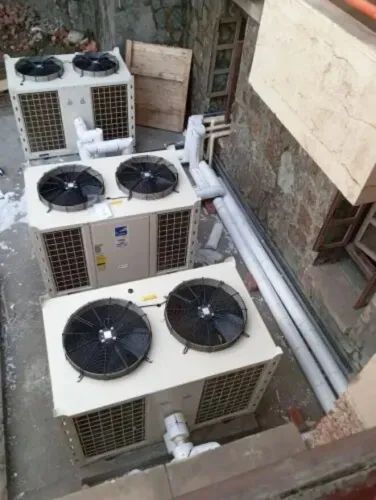
2. Require a trapped, frost-protected drain for outdoor-unit defrost water. Do not accept discharge onto a path, drain cover or shallow pipe: freezing water creates ice and a slip hazard.
3. Ask for sound pressure at the nearest bedroom and neighbouring property, not only the catalogue sound-power figure. Confirm night-time settings, reflected sound from nearby walls, the proposed position and compliance with applicable planning and noise rules.
4. Check that the electrical supply handles the compressor, immersion heater, pumps, crankcase heater and backup heater in their worst-case operating combination. Obtain the cable size, breaker rating, protective devices, earthing arrangement, consumer-unit capacity and maximum supply demand.
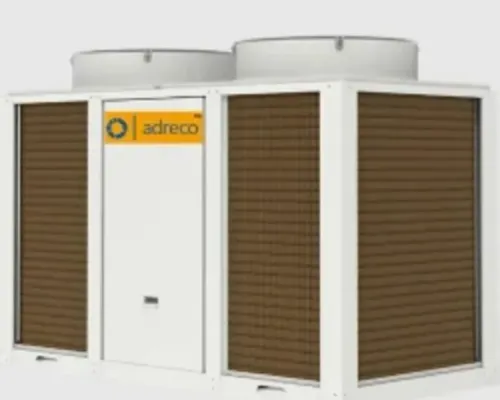
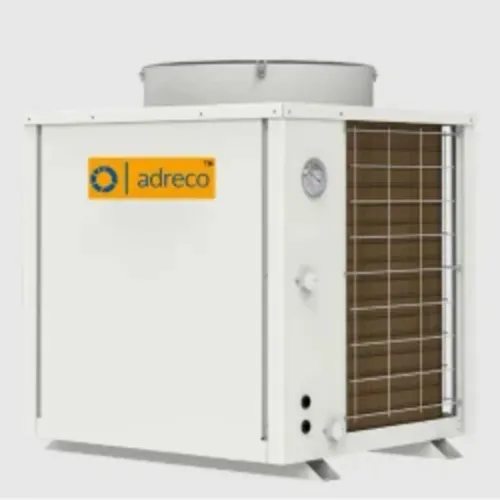
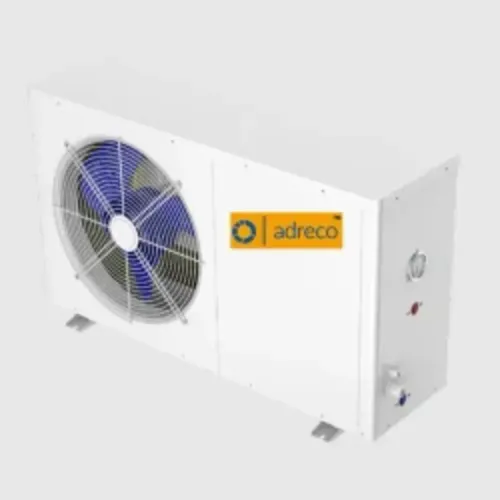
5. Ask for a written installation schedule. Adreco Engineering Pvt Ltd is one example of a supplier you can ask to define this boundary instead of accepting a heat-pump-only quotation. Have the schedule state who supplies, installs and commissions each item.
Related product
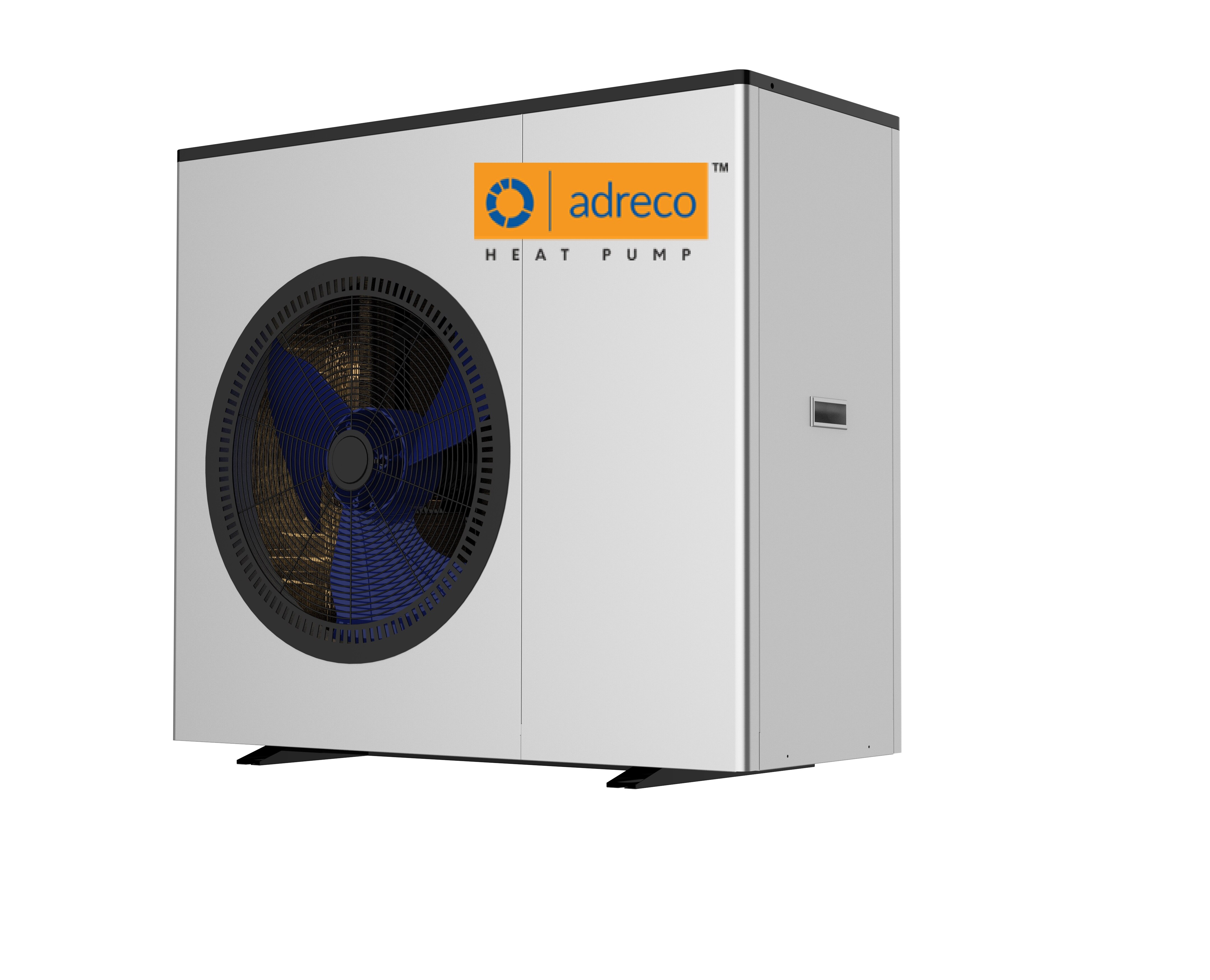 | Domestic Heat Pump ₹115000 Features: 1. Operating ambient temperature range up to -25° C to 45° C. 2. Hot water temperature upto 60° C. 3. View product → |
What should the handover and operating plan prove?
Approval should wait until the installer proves that the design is legal, controllable and usable at peak demand, not merely efficient on paper.
Check these installation points before signing off:
- Confirm local planning limits for outdoor-unit dimensions, appearance, position and night-time noise.
- Confirm a frost-protected condensate drain, and ask whether refrigerant circuit work requires a certified technician.
- Request the final commissioning sheet with cylinder setpoint, hysteresis, hot-water schedule, legionella cycle, mixing-valve temperature, immersion-heater control and priority logic between hot water and space heating.
- Have the installer show tank temperature, available hot water, active backup heating and fault-code screens.
- Ask which settings trigger direct electric heating, and how a time-of-use tariff changes the schedule.
- Keep the model number, cylinder data sheet, wiring diagram, service intervals and warranty terms.
The handover must document performance under real operating conditions:
| Condition | Evidence to request | What it proves |
|---|---|---|
| Full tank drawdown | Measured or documented recovery time | Whether the next peak demand can be met |
| Defrost or space-heating demand | Available hot water and priority rule | Whether hot water interrupts heating |
| Electrical backup event | Remaining usable hot water | What happens during immersion or backup operation |
| Furthest outlet | Hot-water flow and pressure readings | Whether showers will perform adequately |
| Night operation | Recorded noise conditions | Whether the installation remains acceptable |
A complete design meets peak demand without hiding frequent immersion operation behind a high headline efficiency figure.
Frequently asked questions
How do you calculate a household’s hot-water demand?
Count occupants, showers, baths, handwashing, kitchen use, laundry and guests, then estimate the busiest hour rather than daily average use.
How should a heat pump and hot-water cylinder be sized together?
Match cylinder storage to peak demand and match heat-pump output to the required recovery time, while allowing for the system’s hot-water operating temperature.
Which heat-pump figures matter for domestic hot water?
Check heating capacity, COP, flow temperature, ambient test temperature and recovery time under the exact conditions stated by the manufacturer.
What must be confirmed before installation?
Confirm incoming water pressure and flow, cylinder connections, pipe sizes, condensate drainage, outdoor-unit location, electrical load and protective devices.
What should the installer prove at handover?
Request commissioning results, temperature and pressure settings, controls guidance, maintenance instructions, warranty documents and a clear operating schedule.